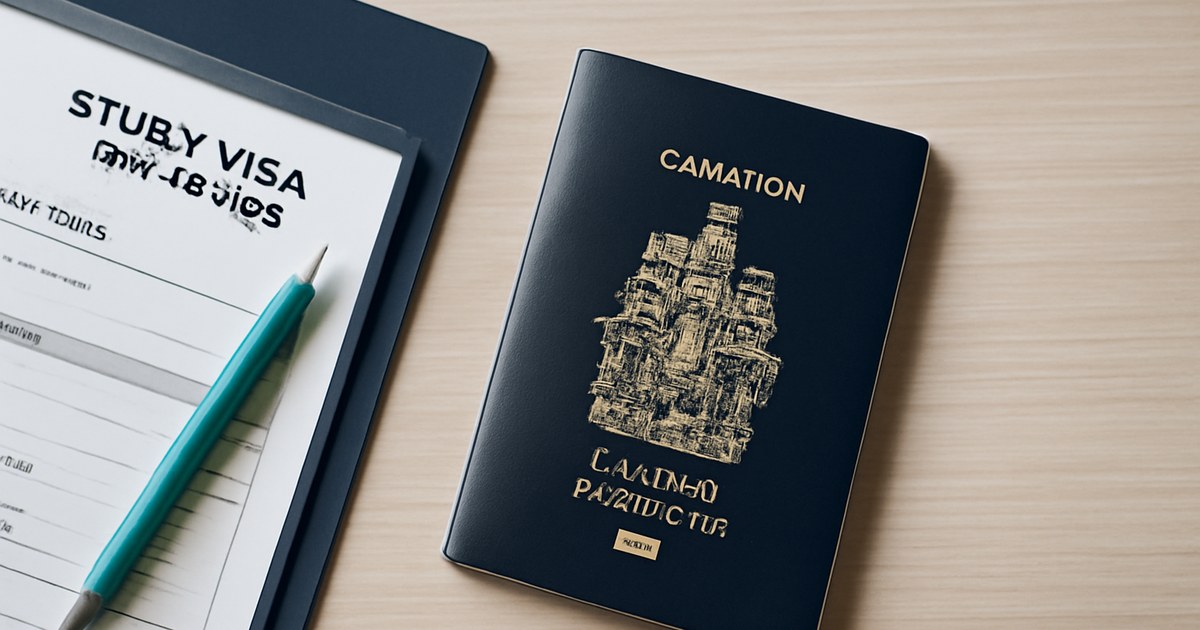
Canada's study permit is one of the most sought-after student visas in the world — and one of the most competitive to obtain following the 2024 immigration reforms. This guide walks you through every step of the application process in 2026.
What Changed in 2024–2025
Canada made significant changes to its international student policy:
- Study permit cap: Canada introduced a cap on study permit approvals for 2024 and renewed it for 2025. Overall approvals are significantly lower than in previous years.
- SDS discontinued: The Student Direct Stream — which offered faster processing for students from eligible countries — was discontinued in November 2024. All applications now follow the regular stream.
- PGWP eligibility tightened: Post-Graduation Work Permit rules changed. Not all programmes at all institutions qualify. College programmes at some institutions no longer lead to a PGWP.
- Attestation letters: Most provinces now require a provincial attestation letter (PAL) as part of the study permit application for new students at the college level.
Understanding these changes before you apply — or before you choose your institution — is essential.
Step 1: Get a Letter of Acceptance
Before applying, you need a Letter of Acceptance (LOA) from a Designated Learning Institution (DLI) in Canada. DLIs are approved by provincial governments to enrol international students. You can verify the DLI list at canada.ca.
Important: Not all DLIs offer PGWP-eligible programmes. If post-graduation work rights are part of your plan, verify PGWP eligibility for your specific programme before accepting any offer.
Step 2: Get a Provincial Attestation Letter (if required)
Most new study permit applicants at college level (not university) must include a Provincial Attestation Letter (PAL) from the province where they plan to study. Each province has its own process for issuing PALs. Your institution should be able to guide you on this requirement.
University-level applicants and those enrolled in programmes of six months or less are generally exempt from the PAL requirement.
Step 3: Prepare Your Financial Evidence
You must demonstrate sufficient funds to pay for:
- Your tuition for the first year of study
- Living costs: CAD 20,635 per year (2024 updated amount) for a single student
- Return transportation
Financial evidence typically includes:
- Personal bank statements (6 months recommended)
- Sponsored funds: a letter from your sponsor plus their bank statements and proof of their financial capacity (employment letters, tax documents, property records)
- Scholarship award letters if applicable
Consistency matters: Immigration officers look at whether your financial picture is coherent. A large deposit shortly before your application with no explanation of its source is a common reason for refusal.
Step 4: Write Your Statement of Purpose / Letter of Explanation
The Letter of Explanation (LOE) or Statement of Purpose is one of the most important documents in your Canadian study permit application. It should address:
- Why you want to study this specific programme
- Why you chose this institution and this province
- Why Canada is the right destination for your studies
- Your academic background and how this programme builds on it
- Your financial situation and how your studies will be funded
- Your plans after graduation — whether to return home, pursue PR through legitimate channels, or enter the workforce
A well-written, specific, and honest LOE significantly improves your application. Generic or template-based LOEs are commonly identified and can result in refusal.
Step 5: Gather Supporting Documents
- Valid passport (must be valid for the entire duration of your studies)
- Transcripts and educational certificates
- Language proficiency results (IELTS, TOEFL, or equivalent)
- Police clearance (if applicable)
- Medical examination (if required — depends on your nationality and length of stay)
Step 6: Submit Your Application
Canadian study permit applications can be submitted online through the IRCC portal at canada.ca/en/immigration-refugees-citizenship. The application fee is CAD 150.
If biometrics are required (most applicants), an additional CAD 85 fee applies. After paying, you will receive a biometrics instruction letter — you must then attend a biometrics collection appointment at a visa application centre in your country.
Step 7: Wait for a Decision
Processing times vary significantly by country of citizenship. Current times range from 4 weeks to 16 weeks. Check current processing times at the IRCC website before you apply and plan your timeline accordingly.
Common Reasons for Canadian Study Permit Refusal
1. Insufficient financial evidence — funds that are inadequate, inconsistent, or of unclear origin
2. Weak Letter of Explanation — vague, copied from templates, or inconsistent with your profile
3. Ties to home country not convincing — officer not satisfied that you will leave Canada after your studies
4. Institution not a DLI — submitting an acceptance from a non-DLI
5. Ineligible programme — applying for a programme that no longer qualifies for a PGWP (if that was part of your plan)
6. Missing PAL — not including a required Provincial Attestation Letter
Find reviewed consultancies for Canada:
- India consultancies for Canada
- Nepal consultancies for Canada
- Bangladesh consultancies for Canada
- Nigeria consultancies for Canada
Browse all education consultants in Canada on ConsultancyCheck. Compare top agents in Toronto or Vancouver.
Useful tools: Canada Study Permit Document Checklist | Find a Canada Consultancy | Ask a visa question →
Related guides: Canada PGWP Guide 2026 | How to Get Canadian PR After Graduation | Best Consultancies in India for Canada 2026 | Top 10 Visa Rejection Reasons
Explore more
Find your perfect consultancy.
Matched to your country & study goals — free.
Frequently Asked Questions
What is the study permit cap and how does it affect my application?
Canada introduced an annual cap on study permit approvals in 2024 and renewed it for 2025. Total approvals are significantly lower than before 2024. This means applications need to be well-prepared and clearly documented — poorly prepared applications that might have succeeded in 2022 or 2023 are more likely to be refused now.
What is a Provincial Attestation Letter (PAL) and do I need one?
A PAL is a letter from a Canadian province confirming that a study permit application falls within that province's allocation. Most new college-level study permit applicants need one. University-level students and those in short programmes (6 months or less) are generally exempt. Your institution should advise you on whether a PAL is required.
Can I work in Canada while studying on a study permit?
Yes. Most study permit holders can work up to 24 hours per week off-campus during academic sessions, and full-time during scheduled breaks. This changed from the previous 20-hour limit in 2024. On-campus work is generally unrestricted.
Find a Verified Consultancy
Browse 800+ consultancies with real student reviews — sorted by rating and verification status.